State of the Music Industry: How the Industry has Suffered in the Past

Intro (1).jpg

By Dominic Wren

The Coronavirus pandemic has made times incredibly uncertain for many people. The music industry is definitely not immune to this but like most sectors of the economy, the music business has had its set backs in the past. 2020 is simply a new set back. In our lifetime, we could think of 4 major crisis’s that have affected the music industry though some were more severe then others. What is most interesting is how the industry rebounded and what came out of those disasters. The overview of these world events will be simplified for the sake of not making this article six pages long.

The Oil Crisis of the 1970s was so impactful on the music industry due to vinyl being the main method of music consumption of at the time. During the time of the crisis, records were being made out of a plastic sourced from crude oil. The Oil Crisis led to rise in scarcity of oil, therefore making vinyl record increasingly more expensive. To counter this, the recording industry tried recycling the vinyl to make the record in an effort to keep the prices as low as possible. Because of this, records lost much of their audio quality. The loss of quality led to major reductions in LP sales that led to losses of hundreds of millions of dollars for the recording industry.

The next set back on the recording industry was caused by the death of disco music during the 1982 recession. With major label facing 22% interest rate with crippling debt and the end of one of the most popular genres of the time created an overwhelming surplus of disco records in record stores. According to Disco–Disco, some of the industry’s most prominent labels were either bought or ceased to exist. In 1982, the industry was in a whole but Sony and Philips jointly launched the Compact Disc and ultimately revolutionized recording forever. This new method of music delivery was much more attractive to consumers due to larger data storage and more consistent audio quality. This introduction outright saved the recording business, as fans would set out to replace entire vinyl music libraries for the new compact discs.

Starting the 21st century, the 9/11 attacks on New York City only inflated new but major problem within the recording arts. 9/11 itself didn’t have a direct effect on the recording industry outside of the political and economic fallout in western countries following the event and the banning of certain songs from being played on the radio after the attacks as they were deemed “inappropriate” right after the fall of the World Trade Center. September 11th is more used as a time frame of when Napster was really gaining traction. Napster was a digital file sharing software where consumers could rip digital music files and share/download them for free. The rise of Napster during one of the United States’ darkest times brought the recording industry and physical sales on a downward spiral. This battle between Napster and the recording industry eventually led to the birth of streaming as an alternate to buying physical media and ripping songs off the internet. Today, streaming makes up about 90% of how people listen to music according to the IFPI Global Report.

The 2008 financial crisis didn’t have any greater effect on the music industry than any other industry but one major impact of the recession is the major labels facing bankruptcy. According to the Music Business Journal, some companies saw a 50-60% drop of their share price in a week including EMI’s shares, which was a label previously part of the “Big Four,” lost more than half of its value that year. Today, Sony Music owns EMI. Nonetheless, outside of crippling debt and the impossibility of securing more loans from creditors, there were not many long-term game-changing effects from this crisis.

The 2020 pandemic will go down in history as one of the greatest financial downfall for the music industry. 2020 is a year unlike anyone has seen before: a pandemic, people in lockdown, a grinding halt on live music, an unpopular government in the US, threats from China, and an unpopular government in Britain that is exiting the EU. According to the World Economic Forum, the COVID-19 pandemic has been the primary cause of loss of almost 50% of the entire global music industry, which is equivalent to the loss of Iceland’s entire GDP and in Canada alone, Music Canada says that 80% of artists have reported needing financial assistance. Adding to this, six months into the initial shut down of live music has reportedly cost the industry over $10 billion in sponsorship deal according to the Information Engineering Group. These figures are absolutely devastating. But what next? In an interview with Alan Cross, a highly reputed music journalist, he explains that this will do a couple of things: first, it will weed out all the weak players and it will force new strategies and new technologies going forward. He adds that some companies will use this as an excuse to reinvent themselves too. Unfortunately, this causes a massive amount of disruption, though it may be for the best on the long term. “There will be casualties,” Cross claims, “but there will also be new power houses that will come out of this.” In my opinion, I agree with Cross. Though we might not see the tumble of one of the “Big 3” as they still gain (increasing) revenue from streaming and more but we might witness the fall some major players of the live music business. Companies like Live Nation, AEG, and other big players are having to manage immense financial losses, having to refund millions of clients for cancelled shows, and reputation-tarnishing law suits. Though I believe the recording industry will come out of this relatively ok, the live music scene will likely look very different from what is was before the pandemic. The reality is that no one really knows what will come out the other side of this crisis but it could lead to something that is even greater.

The point of looking at the past major events that crippled the music industry is to recognize that after every major downfall that was mentioned revolutionized the music industry in one way or another. The Oil Crisis in the 70s and the 1982 recession was the groundwork for the birth of Compact Discs. 9/11 and the battle with Napster later introduced to world to streaming. 2020 has been a year like non-other and has hit many industries with a baseball bat but we can already feel the start of something bigger and greater coming our way. 

State of the Music Industry: Don’t Forget the Impact on the Supply Chains!

Intro (1).jpg

By Dominic Wren

When thinking of a concert, whether it’s held at a festival or a nightclub, the first things that will generally come to mind is the DJ/act, the music itself, the vibe, or even the location/institution where the event is being held. These are all very important parts to what makes a great music event, but one aspect that most concert attendees overlook is all the secondary businesses that are hired to actually make the event a reality and a success. Think of all the security, lighting, railing, PA systems (speakers), trailers, and even the assembly of the stages themselves. These are only a few of so many more crucial aspects of what makes a successful music event. Well with the live music industry coming to a halt, most of these companies are stuck in a position where they cannot sell their services anymore. Unfortunately, when looking down one section of the economy, it generally has much more collateral damage than we can think of.

In an interview with Zachary Monson, host of Stingray PausePlay and music producer, he stated: “Sadly a lot of the same fate of the venues will fall to the suppliers who, at the same time, have no events to supply to.” Other industry professionals have slightly different opinions on the effect of supply. Ali Shafaee, a director of Escapade Music Festival and DNA Presents, suggests that every industry is taking a hit, so those who are most innovative will breakout of this just fine. He states in an interview with EDM Canada: “It’s not about those with the deepest pockets who’ll survive, but those who are most innovative.” To give a bit a better perspective of the scale of the damage, according to the Daily Mail, Elton John, a musician that makes a gazillion dollars a year, has laid off his backing band and some staff members in the beginning of June. Some of those band members have even been part of the Elton John’s group since the early 70s.

Shut down of live music has unfortunately had some major consequences on not only the festivals and nightclubs but all the companies that make our favourite music events possible. Some areas are more affected than others but all companies that supply concerts have felt some damage. In the next article of the series, we will look at how the music industry has bounced back from past industry crisis’s and by consequence how the industry has evolved. Stay tuned! 

State of the Music industry: Realistic Timeline for the Return of Live Events

Intro (1).jpg

By Dominic Wren

The return of large-scale music events has been a major point of discussion within the music industry. Some want to see the return of festivals by the fall of 2020 and others are wanting to hold out as long as possible for the health and safety of music event attendees. Generally, the consensus is of a hopeful return of our favourite Canadian festivals by summer of 2021. Concerts, such as VELD, Shambhala, Escapade, Ile Soniq, and so many more have been postponed or cancelled until 2021.

Data from a New York Times survey of 511 virologist, physicians and scientists that specializes in the study of viruses and infections, showed that 64% of them said that we are not going anywhere for at least a year. With this said, EDM Canada had the chance to have a chat over the phone with Ali Shaffaee, who is a partner at DNA Presents, the company that operates Escapade Music Festival. EMF is set to return in June of 2021 but he mentions that people should not expect that festivals will be operated just like before. There are many things to consider when reopening a large-scale event, such as Escapade. One of the first thing to think about is how to keep people separate and safe in front of stages, in service areas, smoking zones, bathrooms, and how to get people in and out of venues safely. Another important factor to consider is how much people are willing to pay for extra post-covid costs like extra insurance (not only for festival attendees but also for all the workers too) and increased hygiene services. It might not sound like a lot but for organizers having to manage 35 thousand people, the costs will go through the roof and one way to manage that is by increasing the cost of individual tickets.

In an interview with Allan Cross, recognized for his legendary contributions in music journalism in Canada and around the world, he mentions that organizers and promoters must also consider the PTSD that will come out of this crisis. He states: “how willing are fans to go back to these venues next to all these strangers and potentially get sick.” Many political and medical authorities from Canada and around the world have claimed that large gatherings for festivals and other sorts cannot happen before a vaccine has been properly tested but that is at least a year or two away.

Throughout our interview, Mr. Shaffaee suggested that he does not believe that waiting 2 or 3 years for the return of normal life is realistic. He states that we are not a society that can live without contact, sports, and live entertainment for that long because it is such a huge part of people’s lives. In the end, the reality is that no one can be sure when big concerts will return. Not yet at least… We can only plan to reopen for the festival season of 2021 but that is still only a possibility. The only way to accelerate the fight against COVID-19 and actually make this a reality is to help prevent the spread of virus by wearing masks in public, frequently washing your hands, and social distancing. 

Our favourite artists are also stuck at home and having to social distance just like us. This is especially hard for DJs that need crowds to find exposure and grow their brand. The next article will look at what DJs and producers have been up to during their time in confinement. Stay Tuned! 

State of Music Industry: Article Series to understand the Impact of COVID-19 on the Music Industry

Intro (1).jpg

By Dominic Wren

The novel coronavirus has hit 2020 like a bus. Most parts of the national and the international economy have taken a beating like never before and it there doesn’t seem to be much end in sight. The music industry is in no way protected from this crisis and some even argue that it is one of the hardest hit sectors of the economy. During these uncertain times, so much of information is circling around of the impacts of the virus and it can become somewhat confusing to wrap your head around. In an attempt to clarify all this at least a little bit, a series of articles have been created for you all to read at your own leisure with the hopes that it will make the current situation slightly clearer. The next few articles will look at some of the main topics of this mess, such as realistic timelines for the return of music events, what artists are up to during quarantine, effects on the supply chains that support the industry, how the music industry has rebounded in the past, and the future of nightclubs. Please keep in mind that the information presented only scratches the surface of the reality facing the music business. Hopefully this upcoming string of articles will be of use to your comprehension of this worldwide crisis.

Starting with General Facts and Numbers 

During these crazy times, to say that the global music industry has been turned upside down is still an understatement. Unfortunately, the music business has taken a hit like never before and unless there is a sudden a major change in the course of this virus; it is only going to get worse. Though this might sound depressing, keep in mind that this crisis will also drastically change the way we consume music and that might not be such a bad thing (on the long run at least…). Before addressing these changes, let’s look at the numbers. In 2019, the global music industry was worth over $50 billion according to the World Economic Forum. Half of that total revenue comes from the live music scene alone. With a lasting ban on large-scale gatherings makes the concert business almost worthless. In the case of EDM specifically, the International Music Summit (IMS) reported that even though the global value of the electronic music industry grew 2% in 2019, the estimated total value of the industry is expected to fall 56% from $7.2 billion to $3.3 billion by the end of 2020. Though some small events, such as car raves and social distancing concerts have popped up across the board, it still only represents a very small fraction of the overall live music industry. The IMS has even stated that the club/festival alternatives are unlikely to see long lasting commercial success. With no large scale live events and limited alternative live music experiences, advertising and sponsorship deals, a core part of what makes music festivals and more a reality, is also seeing their share of troubles. According to the Interactive Advertising Bureau, a quarter of advertisers and sponsors have halted completely their advertising efforts while another 46% have reduced spending in the first half of 2020. Adding to this, a 6 month closure of live music has estimated to cost the industry $10 billion in sponsorship deals, the

IEG reports. The main revenue for music artists in the 21st century has come mainly from touring so with no shows and no advertising; artist revenue has also seen a significant decrease. Analysts at IMS have announced that DJ and artist income could fall 61% from $1.1 billion in 2019 to $0.4 billion in 2020. There is a bright side though. Even if this situation seems dire, some sectors have seen much growth. Live streams have been a sort of savior for music fans around the world. When no live performances are available, fans turn to the web for their fix of live music. Reports from the IMS show that 70% of the most watched music channels on Twitch were EDM focused, totaling at about 6 million viewing hours. The same analysis shows that DJs who performed a live set on Fortnite has increased their Instagram follower growth by ten folds during and after their event. Streaming is undoubtedly a promising medium for the future of the music industry though it is only expected to generate about $0.1 billion in 2020. This year is going to be a very hard year for the music industry but it is to be expected in a situation like this. Coming back from these losses will be a long and hard road but one thing that is for sure is that music will never die.

Most ravers around Canada and the world are for sure wondering when the next concert will happen. The answer to that question is unfortunately more complicated than simply assuming that concerts will return as they were on a future date. In the next article, we will be discussing what a realistic timeline for the return of live music event really looks like.

Tomorrowland's Wildly Successful Virtual Experiment

Tiesto-Tomorrowland-2020.jpg

By Ryan Hayes

Last weekend Tomorrowland gambled big with dance music's first pay to attend virtual festival; Tomorrowland Around The World. While events like Room Service Festival previously featured over 100 artists for free, Tomorrowland showcased 60 high profile artists while attempting to create a truly immersive digital festival experience.

Website interface to get in between stages

Website interface to get in between stages

In order to capture true to life movements Tomorrowland reportedly built four green screen studios around the world in: Boom Belgium, Los Angeles, Sao Paulo, and Sydney. Each production space featured 38 digital cameras which jointly amassed over 300 terabytes of raw footage. The 60 artists were spread out over 8 themed stages each built from the ground up and housed in the digital wonderland dubbed Pāpiliōnem.

stage.jpg

Upon entering the festival grounds it was immediately apparent that Tomorrowland Around The World was in a league of its own. Different stages opened at different times, there were set time conflicts, cheesy drink recipes, motivational interviews, and a slew of the regular nonsense you find at real life festivals designed to fill your musical downtown. Pāpiliōnem itself was beautiful, especially after nightfall when the island burst to life with hundreds of glowing multicoloured lights.

Day 1:

Oliver Heldens held down the festivals opening slot with an hour and a half long Day Break Session. The attention to detail was impressive, and the events theatrics progressed seamlessly mirroring true to life sequencing. Being the first act the digital crowd was dispersed for Heldens; the sun was high in the sky, there were no fireworks, and the visuals were toned way down. Unfortunately, so much work was put in to the main stage itself that the audience looked uncanny and low resolution. To a degree it broke the immersion. Nonetheless as the day progressed and the sun went down the focus shifted to the stage and its light show refocusing the viewer on what mattered. Helden's performance was great, he is one of the few artists who has effectively utilized the pandemic to raise his stature within the EDM community, and he deserves every ounce of light shown on his talent. 

Day one was ruled by the Freedom Stage and house music. David Guetta's Jack Back alias played an early morning set fulling legitimizing the artistic abilities of his side project. The set was easily a highlight of the day and proof that act should appear on more festival lineups. After Jack Back, Fedde Le Grand provided the only break from the Freedom Stage's programming. His set was at the Elixir Club; a secret stage housed within the Main Stage's compound. Fedde Le Grand doesn't play many North American festivals, so any set from the seasoned Dutch maestro is always welcome. 

Tiesto AKA VER:WEST

Tiesto AKA VER:WEST

After that is was back to the Freedom Stage for a world premier performance from Tiesto's newly minted progressive house alias VER:WEST. The set was moody, atmospheric, and polished—for fans expecting anything resembling his old trance days...it would have been a disappointment. The set was good enough to leave me curious to see where to Tiesto takes VER:WEST from here; and his late addition to the lineup was the kind of massive get an all digital festival like Tomorrowland needs to sell tickets.

It was during VER:WEST's set that the Freedom Stage's visuals truly popped. The dark enclosure downplayed the audience and focused on the laser/light show which was beautifully synced with the music. Tomorrowland's team really outdid itself, I was doubtful, but the visuals really brought the experience home.

Eric Prydz [CELL.]

Eric Prydz [CELL.]

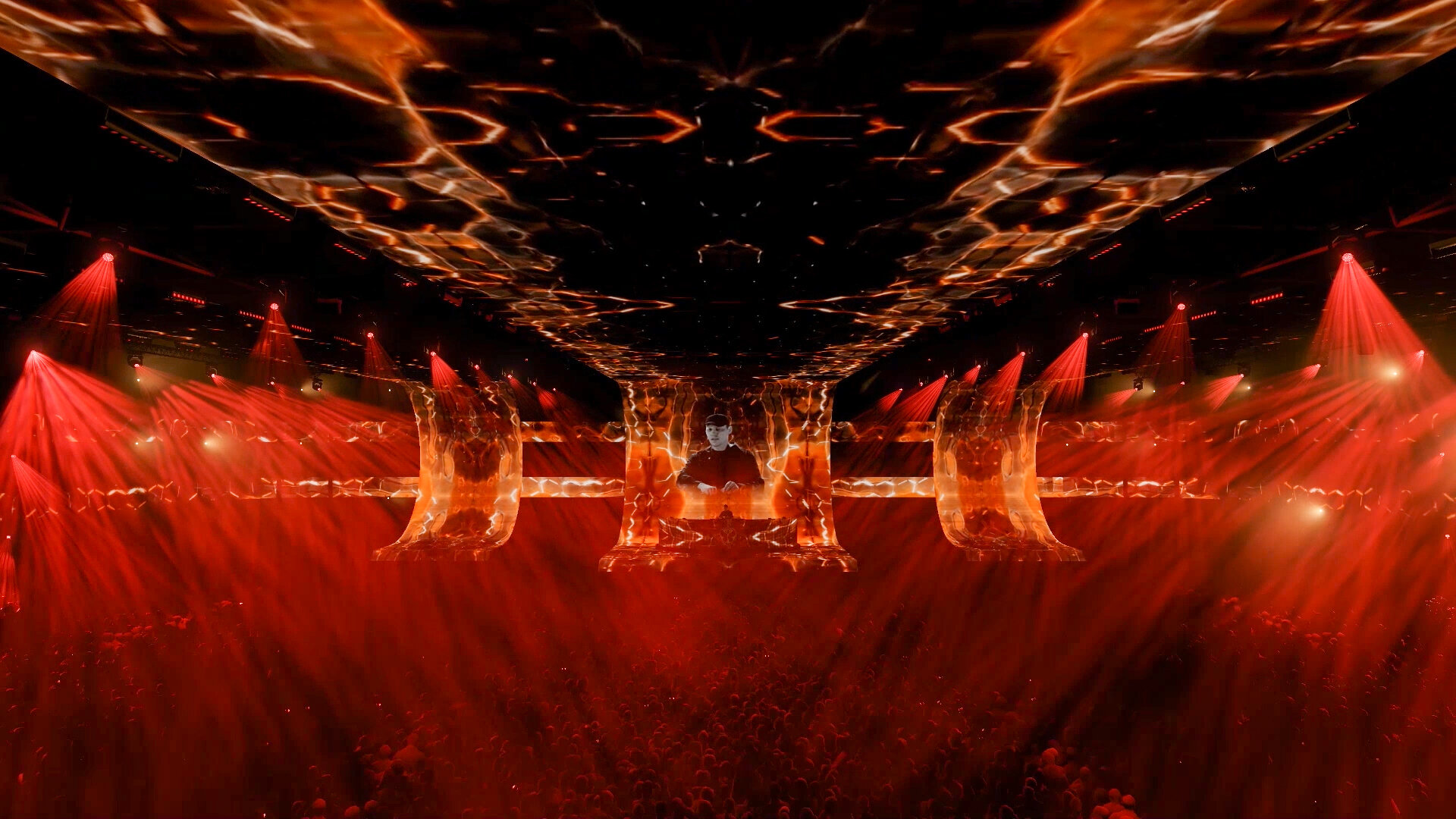
After VER:WEST Eric Prydz closed out the Freedom Stage with his new [CELL.] concept. It was immaculate. Tomorrowland's visuals may have exceeded my expectations, but the [CELL.] was in a league of its own. Prydz team painstakingly created the kind of genuinely unique journey that his fans have come to expect—it needs to be fully experienced to truly be appreciated. The [CELL.] didn't disappoint and was undoubtedly as good as it gets until we can all return to real life events.    

The only real time the main stage came to life on day one was during Afrojack and Armin van Buuren's sets. As soon as Afrojack hit the stage it became clear that an artists performance was just as important as the tracks they selected for their set. Filming a festival set in an empty studio is no easy task, but Afrojack brought the same energy he would to an Ultra set, and it really set him apart. During all of the sets at the Freedom Stage none of the artists uttered a single word, and while the music spoke for itself, it took the bombastic nature of the main stage and an artist like Afojack to fully complete the illusion of a live festival act.

Armin Van Buuren

Armin Van Buuren

Armin previously stated the importance of his Tomorrowland set in an interview leading up to the event. His hour was full of IDs fulfilling my hunch that Tomorrowland Around the World would replace Ultra as 2020's preeminent festival and the industries most importance testing ground. This was Armin's one quarantine live stream, and his chance to temporarily dominate a blog news cycle.

As much as I want to dislike Carnage...who was playing at the same time as Armin...he remains a highlight. It is  impossible not to get swept up in the pure energetic madness that takes over when he graces the stage. It's delirium, it kills brain cells, and if you let it seep in to your bloodstream it provides a full body escape from reality. 

CORE stage

CORE stage

By the end of day one it was clear just how much work was put in to the design of each individual stage. While Freedom provided the best lighting effects. Core brought Shambhala forest party vibes (Anna's set was a highlight), and The Cave conjured a otherworldly shipwrecked fantasy—if Han Solo, Netsky, or NGHTMRE ever really play in a cave with floating boulders alight with the glow of hundreds of luminous sparks...sign me up.

Day 2:

An early day two highlight was EDX on the Elixer Stage. His pacing and energy was the perfect way to warm up and get back in the groove for another day of music. With the original festival time table made for European audiences a few of the sets came out of the gate a little too strong for 9 AM on a Sunday morning; in retrospect Marlo put on a fantastic show, albeit at the wrong time of day for Western hemisphere audiences.

Transitioning from house to trance, the Freedom stage once again pumped out solid sets throughout the day. NWYR was a lighthearted standout. Less bombastic than Armin van Buuren's main stage set—both artists played very different edits of Blah Blah Blah, exemplifying the varied approach trance artists took on each stage. It lent credence to the authenticity of Tomorrowland's thoughtful stage curation.  

The highlight of day two was the absolutely stacked main stage lineup culminating in the one-two-punch of Tiesto, David Guetta, and Martin Garrix. Tiesto put on a middle of the road, well constructed, traditional main stage set; tracks from his latest album play much better live than they do as a casual listen. Guetta took to the stage with his near perfect Future Rave intro edit of Titanium. His selection was a mixture of Future Rave, remixed Guetta classics, a token Jack Back offering, and a handful of IDs. Guetta's set was everything his Ultra closing slot was meant to be. It was the beginning of a new era in his career; he has entirely modernized his main stage persona in a way no other legacy artist has managed to accomplish. It's unique while still being wildly digestible and it will propel him back to the top of his game.

Martin Garrix

Martin Garrix

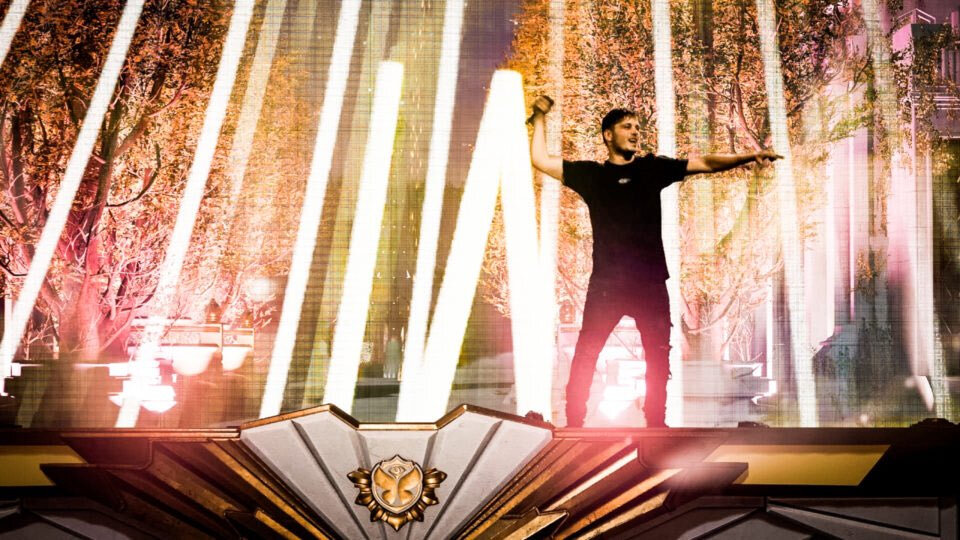
Garrix closed out the festival with the most believable performance of the weekend. The energy he put in to creating a realistic performance was unparalleled. Not to mention it has since been confirmed that he played 8 new STMPD RCRD IDs during his set. This was Garrix at his best.

Ultimately the entire event was a resounding success. A masterclass in digitizing and bottling a festival atmosphere. The stream inevitably would have been more fun with a room full of friends...or a field of like minded festival-goers—but that would negate the very reason the virtual experience exists. Tomorrowland Around the World legitimized a new way of consuming top-tier DJ sets that will only continue to gain prominence well past COVID's current stranglehold on the market. The event may not have made many waves in Western North America, due at least in part to the time difference, but it severed as proof of concept. A million people around the world tuned in, and the next iteration will only bring more eyes.

If you missed the festival the Relive platform is now up and running with every set on demand until August 14th for just over 12 Euros. That comes to roughly $18 for over 60 hours of music. Not bad.

Until next time  Pāpiliōnem.