12 impressions from WayHome Music & Arts 2017

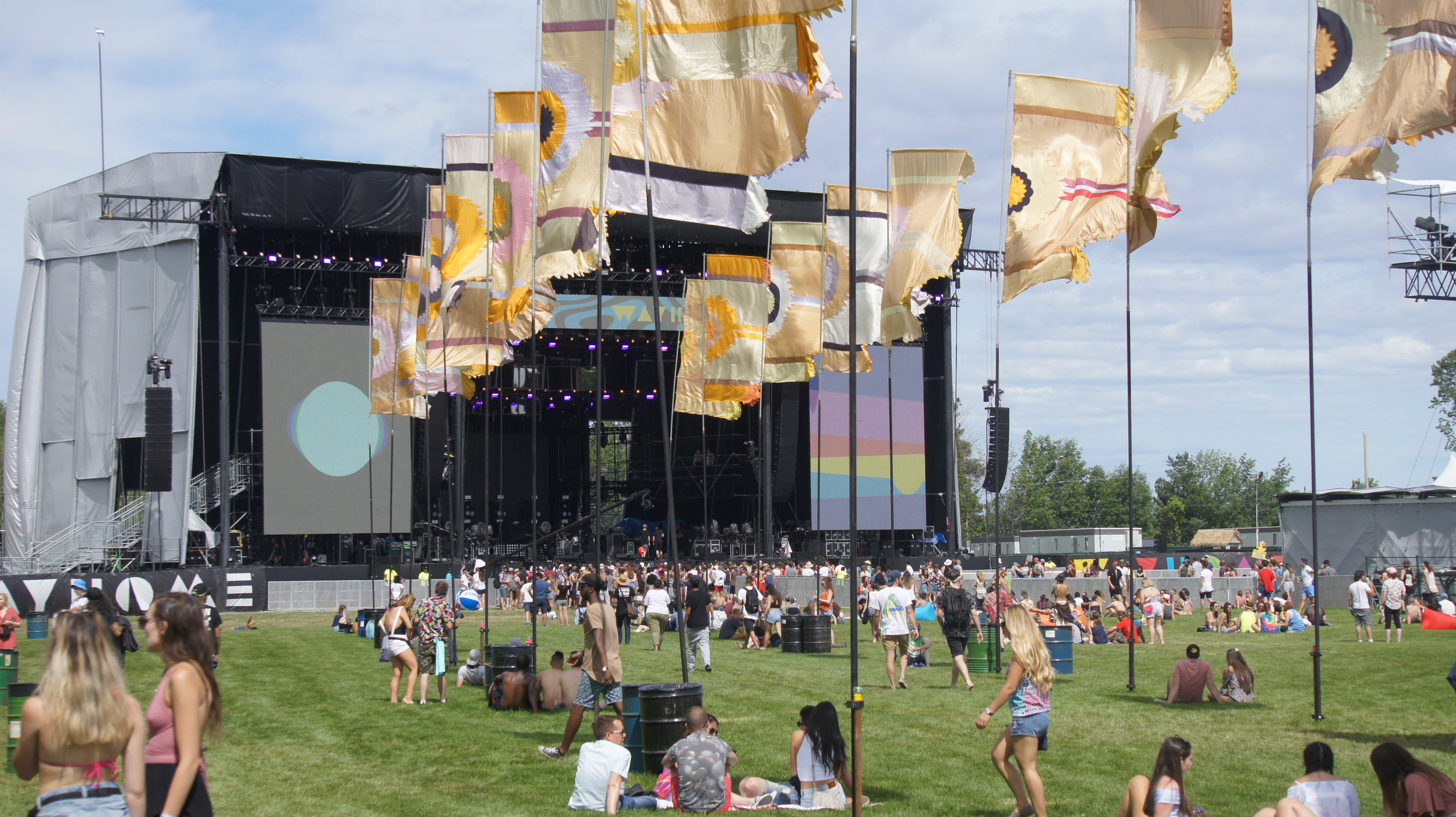
The WayHome festival grounds was impeccable

From the pristine lawns, the stage setup, the food options, the VIP layout, and more - the festival grounds at Burl's Creek for WayHome was almost perfect. The stage sound systems were ideal for the allotted areas with limited sound bleed between stages. There was plenty of room to dance and never once did I feel claustrophobic. The areas behind the main stage were perfect for sitting down with friends and relaxing, while hearing the music without any noticeable degradation. The food options were diverse, there were plenty of water stations, and thanks to Perrier, we even had a stylish air conditioned space to relax in with a full schedule of DJs playing a wide range of music. Overall you couldn't ask for a better layout than what was found at WayHome. 

Porter Robinson

The last EDM act of WayHome came from none other than Porter Robinson, who recently graced the mainstage of Coachella with Madeon. His atmospheric tracks from his now classic album Worlds filled the WayHome stage which was accompanied with vivid anime graphics and abstract computer generated art. Porter's set up is elaborate for a single artist as he had a mic for singing, 2 keyboards, a mixer, and a drum pad. At times he would be busy manipulating two stations at the same time, which was captured on the big screen in all of its glory. The simplicity of his set was magical. Listening to his big tracks like Shelter and Sad Machine was an emotional experience for everyone there, as the crowd did not hesitate to show their appreciation every chance they got. This was an intense Porter performance, and the best set I've personally seen him play out of the 4-5 times prior. His set at WayHome will not be soon forgotten. 

Justice

Justice possibly played the best individual set at WayHome this year. Seeing this French duo live with their full stage setup takes their music and overall atmosphere to a whole new level. The stage lightning would morph multiple times throughout the performance to suit the mood, and even though the lights were awe-inspiring, Justice's famous minimalism came through as the colour schemes did not surpass 1 colour at a time out of 5-6 total. While Gaspard was mostly busy at the controls, rarely looking down at he crowd, it was Xavier that took the time to interact and get the crowd even further into their performance. Both of them have such good chemistry that it was a treat to watch them riff off another during the set. 

Flume

Flume closed out the mainstage on day 1 with a goosebump filled showcase of his tracks. The electricity of the crowd was palpable as they sung loudly to the Australian's many vocal hits including "Never Be Like You". The music was backed up by his impressively crisp graphics and simple yet beautiful cubed DJ booth. As much as Flume's originals soar, listening to his remixes and edits are equally as pleasing as he dropped his remix of Lorde's "Tennis Court", the remix of Hermitude's "Hyperparadise", and his edit of Rustie's "Slasherr" track. A lot of fans got to see what an exceptional artist from the electronic dance music world can offer as Flume put on a master class of a show to end the night on the right footing. 

Illenium

Once the day turned into night on day 1, the crowd was pining for a higher tempo performance in which newcomer Illenium provided in full. By 9:40 pm on day 1, Illenium was the first EDM act to play at WayHome, and put on a show filled with melodic bass music. He previewed a brand new track that fit in right into his emotional wheelhouse with soaring female vocals paired with future bass. His set up was ambitious as he made room for live elements into his setup including drum pads that he used frequently. His set was short, only 50 minutes, but provided the landscape to set up the rest of the evening with Flume and Justice.

Louis The Child

Unlike some future bass producers that will remain unnamed, Louis the Child did not succumb to the idea that they need to play harder stuff to woo the crowd. They stuck to their guns and showcased the sound that got them to WayHome in the first place. I give credit to this Chicago duo as they brought their feel good tracks and remixes, including their remix with SteLouse for "Inside Out" by the Chiefs, or the re-imagining of "Genghis Khan" by Miike Snow. Saving their best for last, Louis The Child wound down their afternoon set with "Love Is Alive", their hit with another upcoming artist Elohim. 

Marshmello

Quick cuts into the meat of the track that got the crowd hyped. Day 2 was a more relaxing day but after a day of acts on the relaxed side, fans were ready to rock the WayBright stage once Marshmello took the stage. The "mystery" DJ brought it heavy with quick cuts filled with bass ("Throwing Elbows" by Excision/Space Laces) and hip hop anthems ("Humble" by Kendrick Lamar). The focus of Marshmello is to make his fans happy and dancing, which he successfully accomplished through his set. 

Jagwar Ma

This Australian band gave the intimate crowd at WayBright a special surprise - a flawless performance showing the full capacity and range of their tunes. Gabriel Winterfield was in top form as his voice lifted despite the sweltering 30 degree Toronto heat as the crowd enjoyed the show despite being baked. The electronic beats may not match the big room rhythm of a Martin Garrix, but Jagwar Ma cleverly incorporates electronic aspects into their live show that complements their sound. At times it turned into a rave as the beats took over in an amazing display of energy by the band. The set was only 30 minutes long but their impact on the festival was felt.

NON-EDM IMPRESSIONS

Schoolboy Q

Credit: Kara Ramos

Schoolboy Q played his show infront of the biggest midday crowd on the mainstage of the entire WayHome experience. The huge crowds underlined the shift among music tastemakers as the ascendancy of hip hop has arrived. The L.A. rapper dressed for winter with his tuque and a windbreaker, despite the near 30 degree heat. To his credit, Schoolboy Q stuck to his style and did not remove his original outfit. With multiple moshpits happening at once, WayHome fans went wild for his unique hip hop sound. 

Jazz Cartier

Out of all of the JUNO winners this year, none have used the platform better than Jazz Cartier, the winner of the best rap album of the year. Where Schoolboy Q left off, Jazz Cartier took it to the next level with his more in your face aggressive hip hop. At one point he invited the crowd to follow him to the food trucks near the stage where he got up on the roof of the poutine truck and rapped. Overall a memorable show.

Tanya Tagaq

Watching Tanya Tagaq is an experience that no one should miss. The vocal range and the multitude of sounds that she can create is out of this world. The more extreme the sound, Tanya's body motion becomes even more intense. Her songs leave plenty of room for experimentation as her band follows her lead. For those that want to hear something more experimental from a talented Canadian artist, then Tanya Tagaq is for you. Once it was over, the intimate crowd gave her an effusive applause which elicited an ear to ear smile by Tanya.

Frank Ocean

Ambitious, intense, and perfect - it's hard to put into words what the crowd had the honour to see on the final day of WayHome but Frank Ocean put on a performance for the ages. Having only played a handful of shows in the last few years, Frank Ocean was stoic yet vulnerable on the big stage and was not afraid to re-start songs that felt short of his lofty expectations. He did not use the mainstage like the other acts from the past 3 days as he created his own stage island out in the crowd filled with movie quality cameras, a full band, and more. The love for Frank Ocean was real as the Toronto crowd happily sang every word to his songs, which he fed off of, even removing his headset at times to feed off the energy. 

What to do this weekend (August 4th - 6th)

If you want to keep track with what's going on electronic dance music wise in your city, especially if you live in Calgary or Toronto as Chasing Summer and Veld are happening this weekend. Just click below and start planning!

Click here to check out the weekend guide

Watch Tomorrowland's live stream all weekend long (4 channels + schedule)

Tomorrowland is back this weekend with a full live stream schedule for 3-days with 4 channels to chose from. If you happen to stay in this weekend, there is no better festival in the world to watch than Tomorrowland's live stream. Check out the schedule (Will refresh the schedule for Saturday and Sunday) and live stream below. 

8 questions about the Polaris Music Prize answered

VIA The Polaris Music Prize FB Page

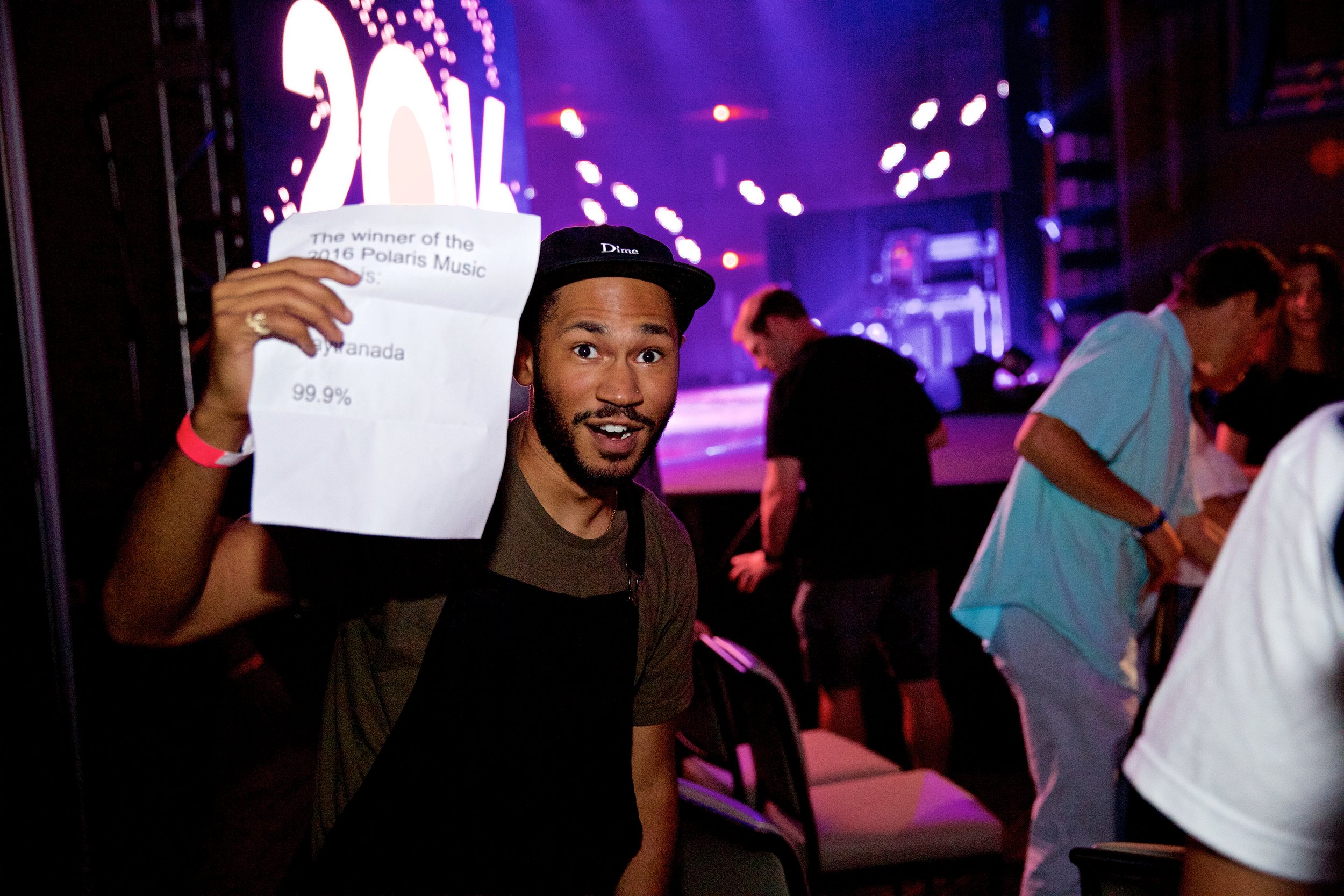
The Polaris Music Prize, a $50,00 cash prize given to a Canadian artist who was voted by 200 hand picked jurors and music taste makers. The 40 album long list was reduced to a 10 album short list earlier this month, with the 2017 winner to be announced at a Toronto Gala on September 18th. Last year the award was given to the talented Montreal artist and recent JUNO Award winner Kaytranada for 99.9%, and with A Tribe Called Red on the short list this year, electronic producers have a chance of winning back to back. 

EDM Canada talked to Steve Jordan, the founder and Executive Director of the Polaris Music Prize. We talked about the history of the award, the process of selecting a Polaris winner by how they select the 40 album long list all the way to the ultimate prize winner, and more. 

What is the Polaris Music Prize? 

Steve Jordan: The Polaris Music Prize is a cash award of $50,000 cash prize determined
by what we call “music filters” that are music critics, bloggers, Djs, and basically anyone that takes in a large amount of music, filters them for their own taste, and broadcast that to their audience. 

Kaytranada - The 2016 Polaris Prize Winner (Danny Williams / Polaris Music Prize

Polaris has been around since 2006?

Yes, 2006. The prize is determined by a 40 album long list, where jurors vote on that and reduce it to a 10 album short list. Then the winner will be determined by 11 invited jurors from the pool of close to 200 jurors to form the grand jury, and they decide the winner. 

How do you determine the 11 jurors on the grand jury?

We have a matrix of jurors and who they voted for, and we make sure that we have one juror at the discussion that has championed one of the short list records. 6 weeks before the final voting, we send them each jury member all of the short listed records and listen to them until they are all equally sick of all of them. Then we invite the grand jury to Toronto (6 out of 11 of them are outside of Toronto), as far away as Northwest Territories, and just before the gala, we have what is called an “epic dinner”. At the “epic dinner”, we have everybody talking about
every short listed record. If somebody picked a particular record on top of their ballot, they go first. 

It's like a debate. 

It's very respectful, and it's the most exciting part of the whole thing. That dinner takes about 4 to 5 hours, then afterward everyone returns back and re-listens to the albums. Sometimes opinions can change, where at first they didn't get a record, but now hear it differently after one of the jurors talked about it. When they hear from somebody that really loves a record on why you should vote for it, they may reconsider their vote. 

The next night the bottom 5 of the 10 short listed albums are voted off, then following more discussions there is another round of voting and 2 more are voted off. Finally the last 3 albums are discussed and the winner is selected out of those 3. There has only been on occasion there
has been a tie, and in this case there is a new vote to determine the winner. That's why we have 11 jury members. 

How has the perception of the Polaris prize evolved over the years?

We just do what we do, everyone's perception is different. Some people don't like competitions, and I get that. We can't control people's perception, all we can do is represent what we do fairly and honestly. We have a process that is very visible so they understand how it works. We don't have a lot of secrets about it and we're pretty open. 

I understand when people take issue with the records we select, or don't select, and we listen to them. Most of it is constructive feedback, and when people are complaining it's because they care and that's the way we look at it. If it's feedback that makes sense to us, we'll internalize it and adopt it. 

All we're trying to do is to get people who are open minded about music to get other people more open minded about music. We don't make the assumption that people only listen to one thing as we seek good music regardless of genre. We try to form this method in order for us
to say “hey, check this shit out”. That's all we're trying to achieve at the end of this. 

With Kaytranada winning last year, do you think there is wider
acceptance of electronic artists within the overall music community? 

I think the “rock-ist” guys are getting older, and getting out of covering music, and I think the newer jury members are moving away from the idea of “authenticity” wherein “authenticity” is a guitar or an organ vs. creating music from a machine or an 808. But even an 808 is a
vintage instrument.  

For an artist, how can they be considered for getting on the long list for the Polaris prize?

Unlike most other arts prizes or awards, we don't have a “pay a fee and submit" process. We select jury members and it is their jobs to find awesome music. That's what we try to cultivate. I would tell artists to get to know jury members and find out if they specialize in the music
that you make. Chat with them directly. If they like it, they will push it on the other jurors. It's just a matter of doing your homework. 

Are you happy where the Polaris Music Prize is at the moment? Do you have wider ambitions in the future? 

Honestly, we just want to still be around. We believe in what we we're doing, and everybody involved tell me that they believe in it. I think there is a lot of trust in the process, and that we're listening to people. It will evolve but really the objective is to still be around.


My thanks to Steve Jordan for the interview. For more information on this year's 2017 short list nominees, click here. The 2017 Polaris Music Prize will be awarded on September 18th. 

9 questions about the Motion Notion Festival answered

Motion Notion festival has stepped up their game this year with unarguably their most ambitious lineup yet. Set at the beautiful location of Golden B.C. in late August, the combination of the scenery, the music, and the intimacy of the festival will be a special experience for every fan. EDM Canada had a chance to talk to Kevin Harper, the owner and festival director of Motion Notion about the history, the lineup, and what fans can expect from this year's festival.

Give readers a brief history of Motion Notion.

Kevin Harper: We started 18 years ago, I have been working there for the past 10. I was the festival director for many of those years and this year I just purchased the festival from the founder. So it's a new exciting adventure to try to take the festival to new heights this year. But we really started from humble beginnings in Alberta, and outgrew all of our sites to where we eventually landed at the beautiful site at the Bearfoot Lodge in B.C. It's taken on a few remixes, with different art, décor, and location. But we've really come into our own since we moved to the new location about 6 years ago. It's taken off amazingly since then. It started as a psy-trance festival back in the day, and when I came in, we incorporated other styles like drum and bass, electro, house, and breaks. We now have something for everybody.

What makes Motion Notion special?

It is an amazing group of people that come together for Motion Notion. It is a very open, friendly, good sense of humour crowd. Most importantly, they are participators, and not just people wanting to be entertained. We've encouraged renegade stages that are approved by the festival where they can start their own art camp and stage. We are also encouraging artists from all over the world to come. We've got live painters, comedians, magicians, and hypnotists coming. There is a wide gamut of artists that we're seeing come together and create an amazing playground in the mountains.

How many people do you expect to attend the 2017 edition?

We've capped tickets this year at 5,000, by design. People really loving the fact that the festival is a down to earth experience and not super packed. So you can run into people more than once instead of trying to find them all weekend. We wanted a mid sized festival that still has open areas for fans to build stages and art projects. 

click to zoom

What's your philosophy when it comes to forming your Motion Notion lineups?

The gloves came off this year where I could take the musical direction and increase the size of the acts to showcase what Motion Notion has become. We want all styles of music to shine, by inviting both international and regional talent. We have curated a lineup that really does bring the best of all music to our event. This year, we asked ourselves what our dream lineup is, and we really shot for the stars for this one. Everything just aligned this year and it's probably our best lineup ever. We wanted to make sure we brought all of the types of styles that people have appreciated here are covered.

Which first time Motion Notion artist are you most excited to see?

I'm really really excited about Datsik, it's almost a homecoming for him (he's from Kelowna). It's Canada's 150th birthday this year and we wanted a big Canadian feature. We are so stoked to make that work.

Would you consider 2017 to be Motion Notion's most ambitious lineup to date?

100%.

Why are there so many cool festivals in Western Canada?

I would say it's the mountains over here. Having the mountains as the backdrop to our festivals lends itself more to the bassier sounds and it doesn't feel like you're in the city in any capacity. Nature is lending itself to creating cool art. Artists in Western Canada have been pushing the electronic bass sound for many years, from clubs in Calgary, Edmonton, Vancouver – to festivals. It's taken a life of its own and has worked itself down to the States and everywhere else as well.

What's your view on the current health of festivals in 2017?

The health of festivals are evolving. The festivals that get it and have connected with their fans are thriving. The ones that are in it for the wrong reasons, or maybe didn't have that soul to them, are disappearing a little bit. That being said, there are some great festivals that have closed down as well, like Squamish. It was an amazing event and it was a shame to see them go. Festivals are a risky thing and are exhausting to put them on sometimes. You're putting your soul on display so that everyone that judge it after that. It sometimes works, and it sometimes doesn't.

Make your best pitch: Why should people go to this year's Motion Notion festival?

Motion Notion is really in essence about freedom, self discovery, friends, hearing the best music and seeing the best performers on the planet in arguably one of the most beautiful locations in North America. It's your chance to discover new music and new stuff you've never heard of before. There is a magic to Motion Notion that's pretty indescribable until you get there. But people will tell you that it's one of their best experiences of their lives.


Motion Notion takes places from Thursday, August 24th until Monday, August 28th at Golden British Columbia. Tickets are still available - click here for more information.